The complete self-care guide
Acupressure — Ancient Healing,
Modern Evidence
A drug-free, needle-free Traditional Chinese Medicine technique. Press the right points to relieve pain, nausea, headache, anxiety and poor sleep.
By Acupressure Guide Editorial Team · Updated · Evidence-based
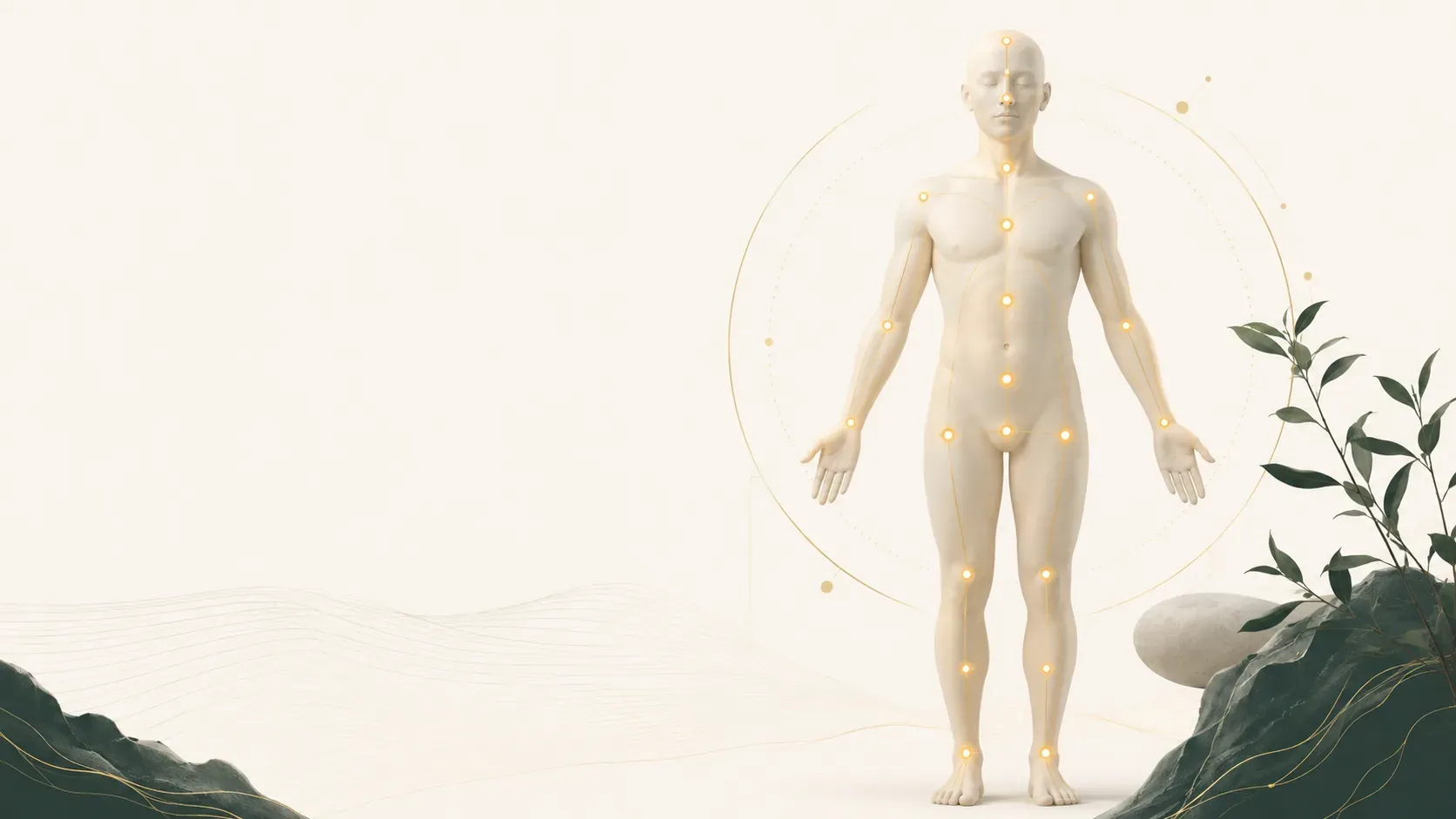
16 points. 12 regions. 8 conditions.
Too many points.
Find your two.
You don't need the whole map. Start with what you feel — every condition guide narrows it to the two or three points that matter most.
What Is Acupressure?
Acupressure is a therapeutic technique rooted in Traditional Chinese Medicine that applies firm pressure to specific points on the body, known as acupoints. These points lie along energy pathways called meridians, and stimulating them with fingers, thumbs, elbows, or simple tools helps restore balance, relieve pain, and support the body's natural healing.
Unlike acupuncture — which inserts thin needles — acupressure works entirely on the surface of the skin. No needles, no prescriptions, no appointments. That makes it one of the safest and most accessible self-care practices available, and it can be learned in minutes.
Key facts
- No needles. Pressure applied with fingers only — nothing penetrates the skin.
- Self-administered. You do not need a practitioner to perform acupressure on yourself.
- 3,000+ years old. Roots in TCM healing traditions, now studied in modern clinical trials.
- Recognized. The WHO recognizes acupressure for pain management and nausea.
The difference from acupuncture
Acupuncture uses needles inserted by a licensed practitioner. Acupressure applies the same points with finger pressure and works only on the surface. Most people find acupressure ideal for daily self-care between acupuncture sessions.
Acupressure vs acupuncture →Find Relief by Symptom
Start with what you feel. Each protocol lists the exact points, their locations, technique, and a step-by-step routine.
Headaches
LI4, GB20 and Taiyang for tension and sinus headaches
LI4 · GB20 →
Migraines
Points that calm the head and settle migraine nausea
PC6 · GB20 →
Neck Pain
Release tension held in the neck and shoulders
GB20 · GB21 →
Back Pain
Target the lower back and sciatic pathways
BL40 · BL60 · KD3 →
Nausea
The most research-backed use of acupressure
PC6 →
Anxiety & Stress
Calming points for a racing mind and tense body
Yintang · HT7 →
Sleep
A nightly routine for falling and staying asleep
HT7 · SP6 · KI1 →
Constipation
Support digestive rhythm and abdominal comfort
ST36 · CV6 →
Explore the Body
Every region has its own point guide — start anywhere.
From head to feet
The ears have a full reflex map. The feet hold KI1, the sole point used for grounding and sleep. The back carries the Bladder meridian, the longest channel in the body. Every region links to the points that live there.
Explore the Atlas16 Essential Acupressure Points
The points most people reach for first. Each card links to a full guide with photos, technique, research and safety notes.
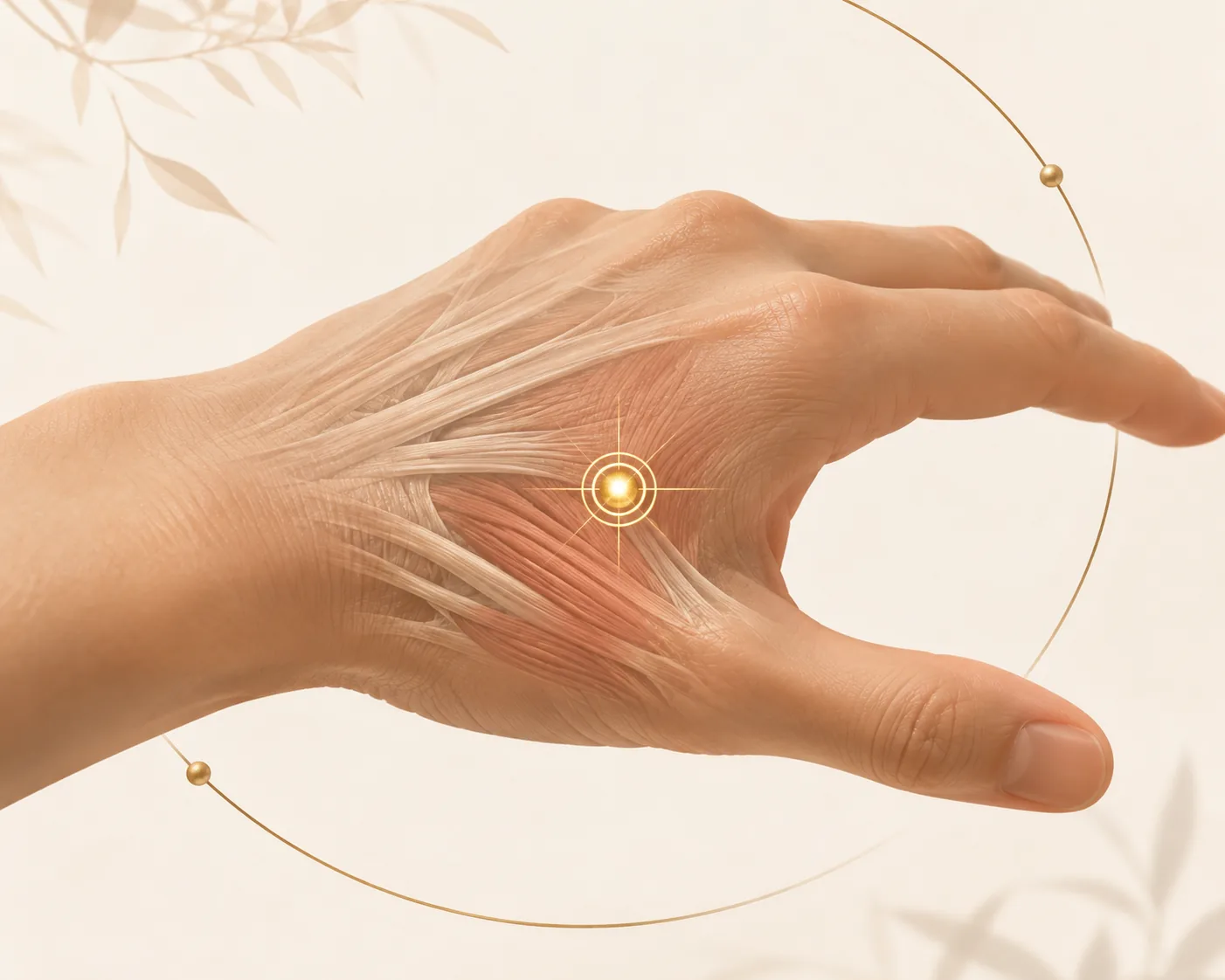
LI4 · Hegu
HandWeb between thumb and index finger
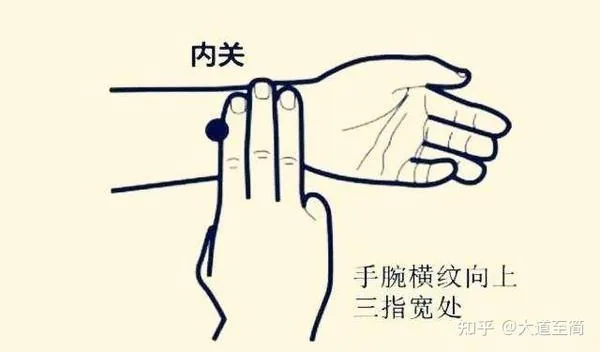
PC6 · Neiguan
ArmInner forearm, three finger-widths below the wrist crease
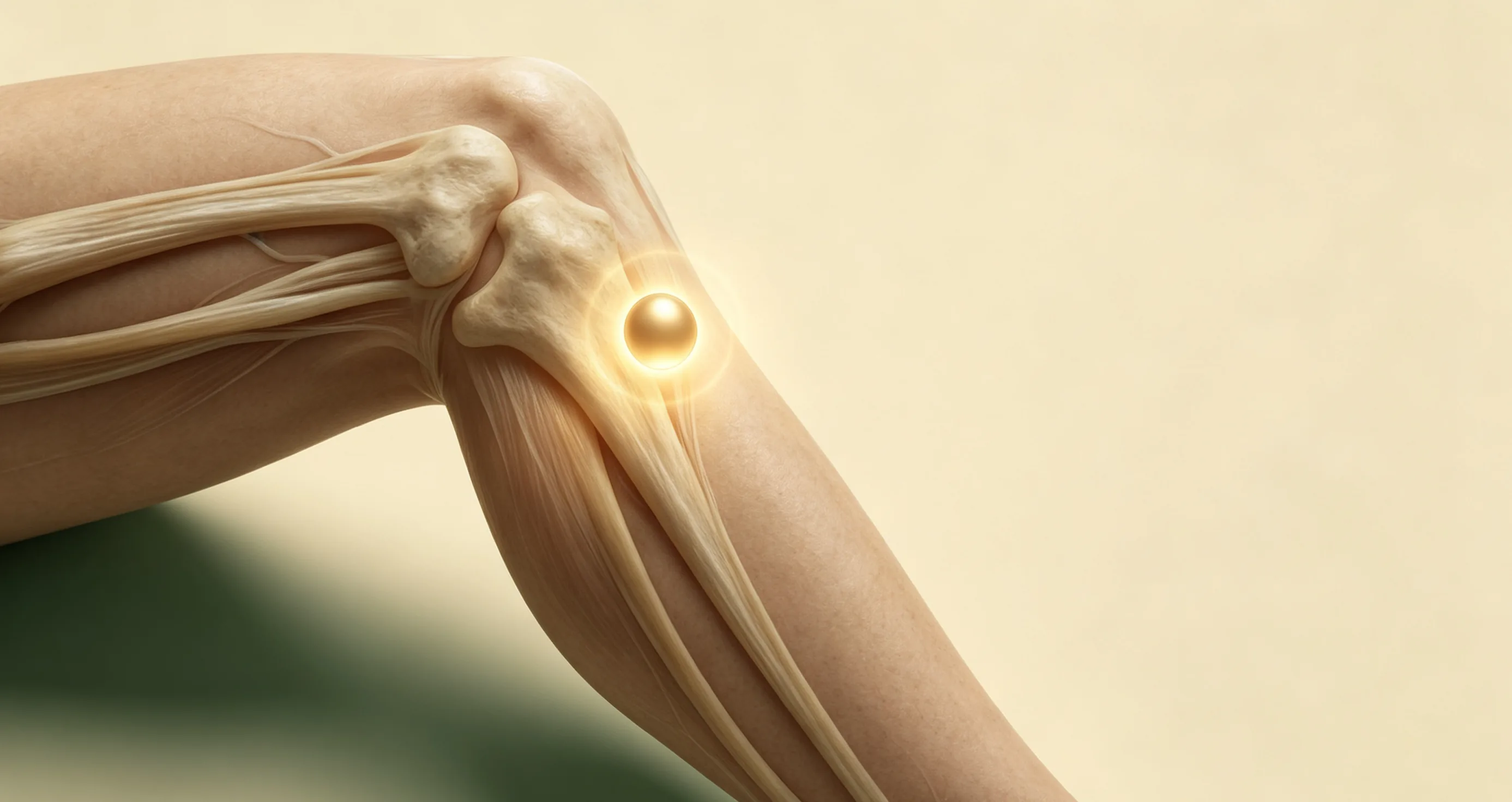
ST36 · Zusanli
LegFour finger-widths below the kneecap, beside the shin bone
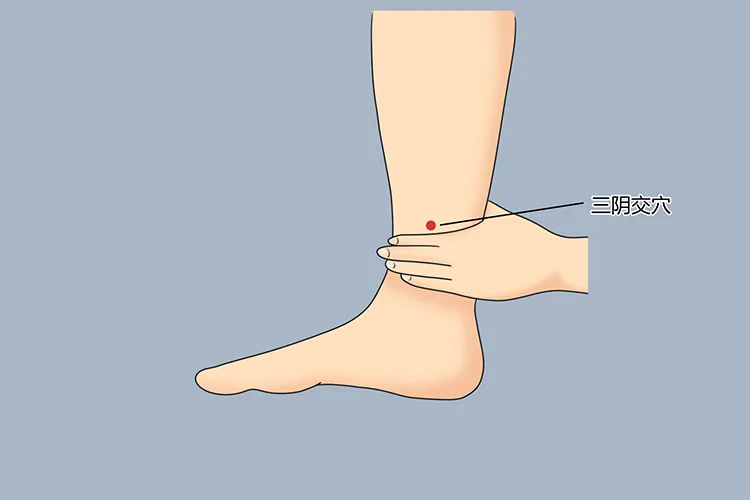
SP6 · Sanyinjiao
LegInner lower leg, four finger-widths above the inner ankle
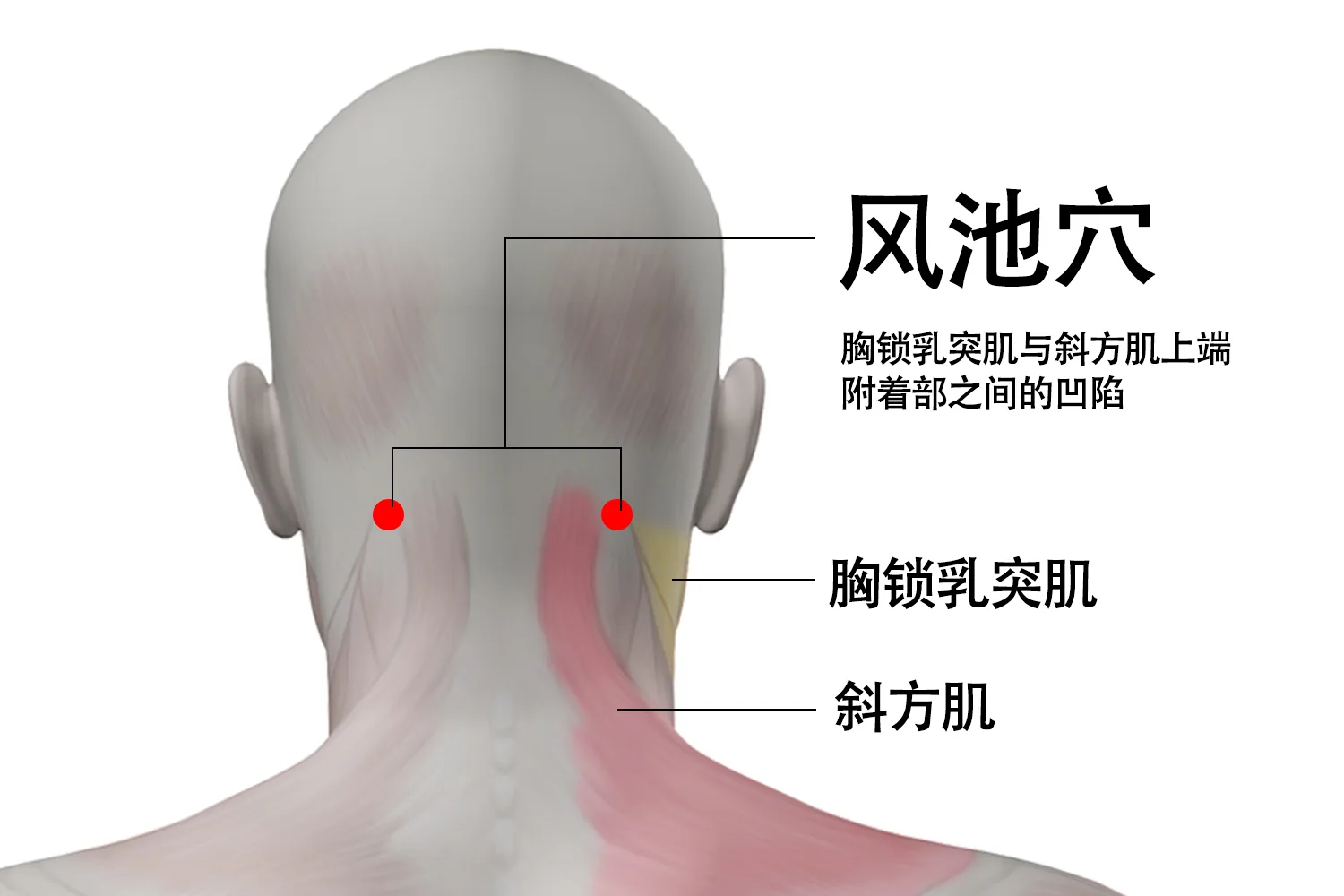
GB20 · Fengchi
NeckHollows at the base of the skull
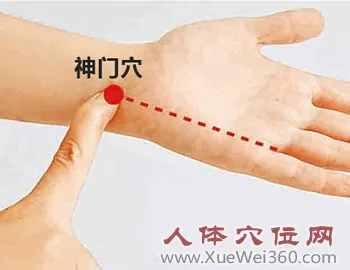
HT7 · Shenmen
WristInner wrist crease, in line with the little finger
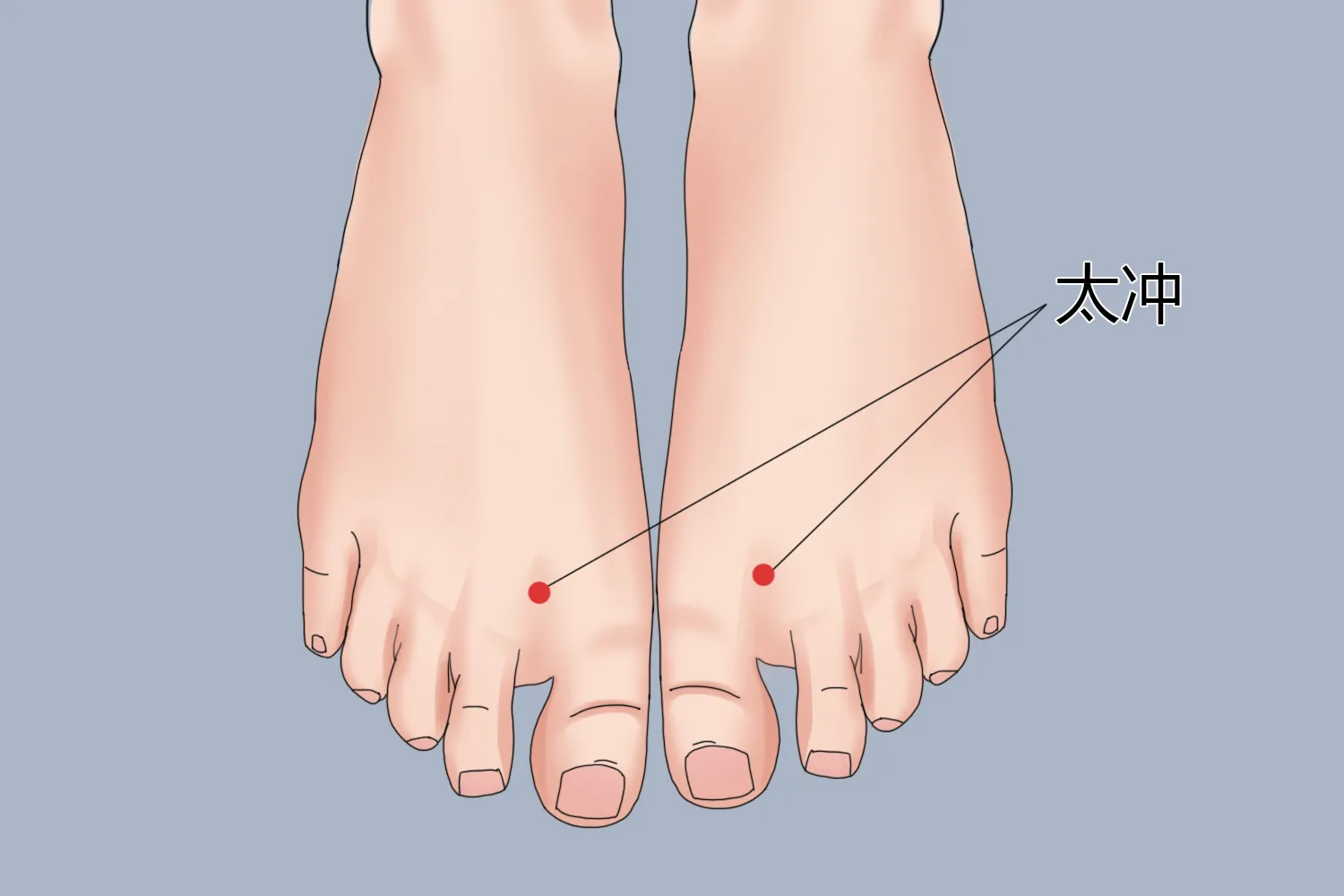
LV3 · Taichong
FootTop of the foot, between the first and second toe bones
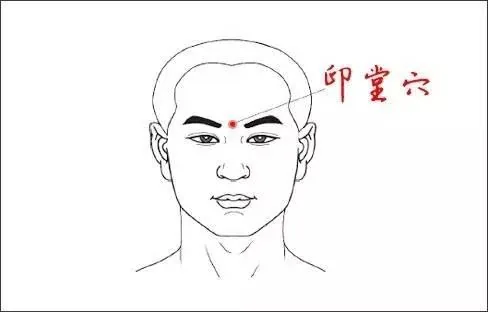
Yintang · Hall of Impression
FaceMidway between the eyebrows
Plus BL40, BL60, CV17, CV6, GB21, KD3, KI1 and LI11 — 16 guides in total.
Does Acupressure Work? What the Research Says
Summary of the strongest published evidence, condition by condition. Full citations on our evidence review.
Nausea & vomiting
The long-running Cochrane systematic review of P6/PC6 stimulation found non-invasive stimulation reduces post-operative nausea and vomiting — the strongest evidence on this site.
Pain
Systematic reviews of acupressure for pain, including back, neck, and headache, describe the evidence as promising but limited in quality, with many small or difficult-to-blind trials.
Anxiety
A systematic review and meta-analysis of acupressure for anxiety found a positive overall direction of effect while calling for more high-quality trials.
Source: Chen HM et al., 2022
Sleep
A randomized controlled trial found acupressure improved sleep quality in nursing-home residents; the wider evidence base is promising but still preliminary.
Source: Liao et al., JAMDA 2020
Headache
A randomized trial found one month of acupressure more effective than a muscle relaxant for chronic headache; review evidence is promising but limited in quality.
Source: Hsieh et al., Am J Chin Med 2010
Safety
Acupressure is generally considered low-risk when performed as described on this site; mild, temporary soreness is possible. Serious adverse events in controlled trials are rare.
The bottom line: the strongest evidence supports acupressure for post-operative nausea and vomiting, and reviews describe the evidence for pain, anxiety, and sleep as promising but limited in quality. It has a good safety record when performed as described on this site. Acupressure is a complement to medical care, not a replacement. See the full evidence review for caveats and citations.
How Acupressure Compares
Choosing the right practice starts with knowing the difference.
Acupressure vs Acupuncture
Same points and meridians, different delivery. Needles require a licensed practitioner; pressure you can do yourself anytime.
Compare the two →Acupressure vs Massage
Massage relaxes whole muscle groups with broad strokes. Acupressure targets specific points for local and referred effects.
See the differences →Relief in three steps
No equipment. No appointments. Just your own two hands.
Locate
Find your point with the location photos and landmark guides in each point page.
Press
Apply firm, steady pressure for 45–60 seconds with small circular motions.
Breathe
Breathe deeply through each hold. Repeat 1–3 times, both sides where it applies.
Acupressure Safety
Know before you press. No serious adverse events have been reported in controlled trials — but a few groups need extra caution.
During pregnancy
LI4, SP6, BL60 and GB21 can stimulate uterine contractions and should be avoided. PC6, Yintang and HT7 are safe for symptoms like morning sickness and anxiety — always confirm with your OB-GYN first.
Pregnancy safety guide →Who should avoid it
Avoid over open wounds, burns, varicose veins, surgical sites and active infection. Use light pressure with blood thinners, and ask a doctor if you have a clotting disorder or recent surgery.
Full contraindications →Learning Center
Everything you need to go from curious to confident.
Benefits
What acupressure can — and cannot — help with, based on evidence.
Techniques
Step-by-step methods: pressure, duration, patterns and routines.
Research
The evidence base behind each condition, with full references.
History
Three millennia of healing, from imperial China to modern clinics.
Written and edited by the Acupressure Guide Editorial Team, with verifiable medical references and safety guidance. Read more about how we research and review content.
Frequently Asked Questions
Quick answers to the questions we hear most.
What is acupressure? ▾
How does acupressure work? ▾
Does acupressure actually work? ▾
What are the best acupressure points for headaches? ▾
Is acupressure safe? Who should avoid it? ▾
What is the difference between acupressure and acupuncture? ▾
How long should I press an acupressure point? ▾
Can acupressure help with anxiety and sleep? ▾
Medical Disclaimer: This content is for informational purposes only and is not medical advice. Acupressure is a complementary practice — it cannot diagnose, treat, cure or prevent disease and should never delay or replace professional medical care. Consult a licensed healthcare provider before using acupressure, especially if you are pregnant, have a medical condition, or take medication.