History of Acupressure
From ancient stone needles to modern clinical trials — the 5,000-year journey of acupressure.
Where Did Acupressure Originate?
The practice of pressing specific points on the body for healing dates back to the Neolithic period in China, where sharpened stones (bian shi) were used to stimulate acupoints. These early tools later evolved into the metal needles of acupuncture and the finger-pressure techniques of acupressure. The first written record of acupoint theory appears in the Huangdi Neijing (The Yellow Emperor's Inner Canon), compiled around 200 BCE, which describes a system of 365 acupoints along 12 primary meridians. This text remains a foundational work of Traditional Chinese Medicine (TCM) and established the framework that acupressure follows to this day.
What Is the Meridian System?
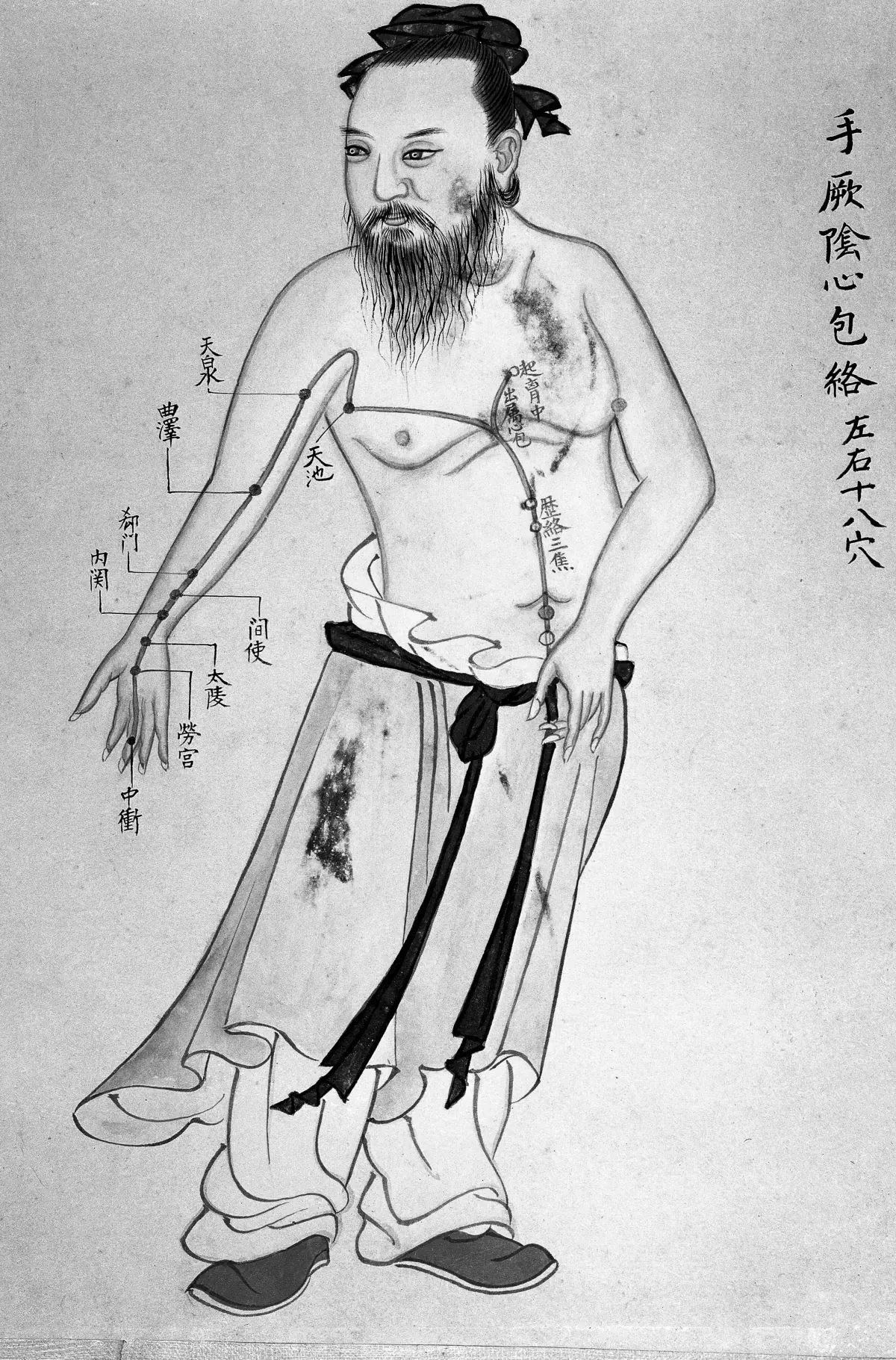
The meridian system is the theoretical backbone of both acupressure and acupuncture. The Neijing describes 12 primary meridians, each associated with a specific organ system, plus 8 extraordinary vessels. Qi (vital energy) circulates through these channels in a 24-hour cycle. When qi becomes blocked or imbalanced, illness results. Acupressure aims to restore balance by stimulating specific points along these meridians. While the meridian system was developed through empirical observation rather than anatomical dissection, modern research has identified correlations between acupoints and nerve bundles, blood vessels, and fascial planes, suggesting an anatomical basis for these ancient maps.
How Has Acupressure Developed Over Time?
- ~200 BCEHuangdi Neijing codifies meridian theory and 365 acupoints
- 282 CEZhenjiu Jiayi Jing (Systematic Classic of Acupuncture and Moxibustion) standardizes point locations
- 1027 CEBronze acupuncture figure created for teaching and examination purposes
- 17th C.Acupuncture and acupressure spread to Europe via Jesuit missionaries
- 1950sChinese government integrates TCM with Western medicine in hospitals nationwide
- 1970sAcupuncture gains international attention after President Nixon's visit to China; research accelerates
- 1990sCochrane Collaboration publishes first systematic reviews on acupoint stimulation
- 2000sfMRI studies demonstrate neuroanatomical correlates of acupoint stimulation
- 2020sAcupressure is included in clinical practice guidelines for pain, nausea, and anxiety management
What Does Modern Research Say?
The transition from empirical tradition to evidence-based practice has been one of the most significant developments in acupressure's history. Today, acupressure is studied using randomized controlled trials, systematic reviews, and functional neuroimaging. The strongest evidence supports its use for nausea and vomiting (Cochrane review of 59 trials), chronic pain, and anxiety. The NCCIH (National Center for Complementary and Integrative Health) includes acupressure in its research portfolio, and several hospital systems now offer acupressure as a complementary service. This integration of ancient wisdom with modern science is the defining characteristic of contemporary acupressure practice.
"Stimulation of the P6 (PC6) wrist point reduced the risk of post-operative nausea and the need for rescue antiemetic medication."
— Lee A, Fan LTY. Cochrane Database of Systematic Reviews, 2009. PMID 19370583.
What Is the Future of Acupressure?
As interest in non-pharmacological approaches to health continues to grow and wearables open new possibilities for self-care, acupressure is also seeing a resurgence of interest. Current research directions include: personalized acupressure protocols based on genomic profiling, combined acupressure and biofeedback interventions, large-scale pragmatic trials in primary care settings, and investigation of acupressure for opioid-sparing pain management. The practice that began with sharpened stones in Neolithic China is now being investigated with fMRI, genomics, and AI — a testament to the enduring relevance of this ancient healing art.