BL10 (Tianzhu) — Celestial Pillar
BL10, known as Tianzhu or Celestial Pillar, is a Bladder meridian point on the back of the neck. It is a key point for relaxing upper trapezius tension and is traditionally used for neck pain, stiff neck, headaches, dizziness, and eye strain.
At a Glance
| Meridian | Bladder (BL) |
|---|---|
| Body region | Back of the neck, just below the base of the skull |
| Best for | Neck pain, stiff neck (wry neck), headaches, dizziness, eye strain |
| Difficulty | Easy to reach yourself with both thumbs |
| Hold time | 30–60 seconds |
| Frequency | 1–3 times daily |
| Pairs well with | GB20 (Fengchi), GB21 (Jianjing), LI4 (Hegu) |
| Skip if | Acute neck trauma, or broken skin over the point (see Precautions) |
Why BL10 Matters
BL10 sits on the Bladder meridian, which runs down both sides of the spine from the head to the feet. Its location — in the hollow just off the back of the neck, on the lateral edge of the trapezius muscle — places it exactly where upper trapezius tension gathers in people who sit at desks, drive, or hold their heads forward for long periods. That muscle is one of the most common sources of neck pain and tension headaches, which makes BL10 one of the most practical points a person can learn.
Classically, BL10 is used for neck stiffness, stiff neck (the locked neck of a bad night's sleep), headaches, dizziness, and eye problems such as red, swollen, or painful eyes, as well as throat complaints. The Bladder meridian's long course means points at the base of the skull connect local neck tension with head symptoms, so pressing BL10 often brings relief that is felt in the scalp and behind the eyes as well as in the neck itself.
Where Is This Point Located?
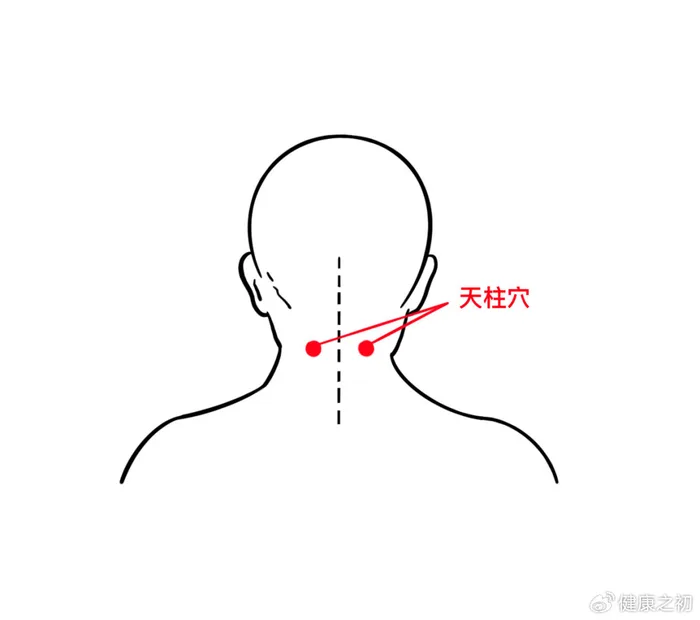
BL10 lies on the back of the neck, about 0.5 cun above the posterior hairline and 1.3 cun (roughly one and a half finger widths) lateral to the midline, in the depression at the outer border of the trapezius muscle. Slide your thumbs from the top of the spine outward until they land in the hollow just inside the thick band of muscle at the sides of the neck — that is the point.
Three quick confirmations you have the right spot: (1) the hollow sits just outside the thick band of neck muscle, not on the spine itself; (2) pressing up and inward produces a deep, achy sensation that may spread into the head or behind the eyes; (3) the point is tender in exactly the spot where your neck already feels tight.
When to Use BL10 (and When Not)
Use it when
- • You feel pain or stiffness at the back of the neck
- • Your neck is locked or painful after sleeping in a bad position
- • A tension headache builds from the base of the skull
- • You feel mild dizziness or eye strain after long screen work
Hold off if
- • You recently had a neck injury, whiplash, or cervical spine fracture
- • There is broken skin, a rash, or swelling on the back of the neck
- • Neck movement triggers dizziness, unsteadiness, or fainting
- • Pressing causes radiating pain, numbness, or tingling into the arm
Use the Hold off column as a safety filter: BL10 is a comfort practice for chronic tension, not first aid for an acute neck injury.
What Are the Benefits?
- Neck pain: BL10 helps relieve pain and stiffness in the back of the neck.
- Stiff neck: It is a traditional point for a locked or "wry" neck after sleeping awkwardly.
- Headache: BL10 eases tension-type headaches and pain felt at the base of the skull.
- Dizziness: It is classically used for mild dizziness and vertigo-like sensations.
- Eye strain: BL10 supports tired, red, or swollen eyes after screen use or long reading.
How Do You Use This Point?
Use both thumbs at once so the pressure stays even, and press up and inward toward the center of the neck rather than straight back into the spine. Keep the head in neutral so the neck muscles stay relaxed.
Step-by-step technique
- Sit upright with the head in neutral, jaw relaxed.
- Place both thumbs in the hollows on the outer edges of the trapezius muscles.
- Press up and inward with firm, slow pressure until you feel a deep ache.
- Hold for 30–60 seconds while slowly nodding the head forward and back.
- Release gradually and repeat 1–3 times daily or whenever the neck feels tight.
Common mistake to avoid: pressing straight back toward the spine or cranking the pressure up hard, which can trigger dizziness or a radiating nerve pinch. The target sensation is a deep, dull, spreading ache — ease off if it feels sharp, or if you feel lightheaded at all.
Combine BL10 with These Points
BL10 works best as part of a neck-and-head sequence. Pick the row closest to your situation and work the points in the order shown, 30–60 seconds each.
| Goal / symptom | Routine (in order) |
|---|---|
| Neck pain | BL10 → GB20 → GB21, 30–60s each, repeat 1–2 times daily |
| Stiff neck (wry neck) after sleep | BL10 → GB21 → LI4, then slow, gentle neck movement |
| Headache | GB20 → BL10 → LI4, holding each 60s for up to 3 minutes total |
| Dizziness / eye strain | BL10 → GB20 with gentle pressure; avoid sudden head movements during and after |
For a fuller program, see the neck acupressure points body guide and our acupressure for neck pain page.
What to Expect
First session (today)
BL10 is often tender, and pressing it usually brings a deep, releasing sensation within a minute. Neck tightness may ease noticeably right away, though stiffness can return later in the day — treat the first session as a test run.
Days 3–7 (consistent daily practice)
With 1–2 sessions per day, tenderness at the point usually eases and turning the head often feels smoother. This matches the pattern in studies of acupressure for neck pain and headache, where benefits appear after several days of regular use.
Weeks 2–4
For chronic neck tension, pair BL10 with posture habits — screen height, chair support, and regular movement breaks. Acupressure is a complement, not a replacement: if neck pain or headaches persist beyond 2–3 weeks despite daily practice, or new symptoms appear, see a clinician.
What Does the Research Say?
Neck pain and headache are among the conditions most often studied in acupressure research. Systematic reviews and randomized controlled trials have examined acupressure as an adjunct for pain conditions, with results that are generally promising but limited in quality. Meta-analyses of acupressure for pain tend to show a positive direction of effect, though many of the included studies are small and their methodological quality varies considerably.
Researchers consistently note that acupressure trials are hard to blind, because the treatment is physical and participants can usually tell whether they are being treated. This makes it difficult to separate the specific effects of a particular point from the general benefits of touch, pressure, and relaxation. The overall picture — which we discuss in detail on our does acupressure work? review — is one of encouraging signals alongside a clear need for larger, higher-quality studies before firm conclusions can be drawn. For neck pain specifically, our acupressure for neck pain page and the neck acupressure points guide summarize the strongest available evidence.
Acupressure has been evaluated in clinical trials for pain, nausea, anxiety, and sleep, with evidence described as promising but requiring further high-quality research.
— Hsieh LL, Liou HH, Lee LH, Chen TH, Yen AM. American Journal of Chinese Medicine. 2010;38(1):1-14. PMID 20128040.
Verifiable sources
- Hsieh LL, Liou HH, Lee LH, Chen TH, Yen AM. Effect of acupressure and trigger points in treating headache: a randomized controlled trial. American Journal of Chinese Medicine. 2010;38(1):1-14. PMID 20128040 · DOI
The trial above tested acupressure for headache, the neck-and-head complaint this point is most used for. It is not a study of BL10 in isolation.
Are There Safety Concerns?
- Avoid if you have a recent acute neck injury, whiplash, fracture, or cervical spinal surgery.
- Do not press if there are skin lesions, rashes, or swelling on the back of the neck.
- Avoid this point if you have vertebral artery disease or unexplained dizziness with neck movement.
- Stop if pressure causes dizziness, nausea, or radiating pain into the arm.
Red Flags — See a Professional
Stop self-treatment and see a doctor or physiotherapist if you notice any of the following:
- Neck pain that started after a fall, whiplash, or other injury
- Numbness, tingling, or weakness running down the arm or into the hand
- Dizziness, unsteadiness, or fainting with neck movement or pressure
- Severe headache, or neck stiffness with fever
- Pain that has not improved after 2–3 weeks of regular acupressure and gentle movement